
Our Workshops
We have developed a wide range of environmental psychology workshops that help explain human experience and behavior while also offering possible courses of action. Our workshops have a modular structure and can be adapted to specific groups, time frames, and content focus as required. They can be held in person or online. Please contact us here if you would like to book a workshop.
From Knowledge to Action – Starting Points and Challenges for Climate Protection
What motivates environmental friendly behavior and climate engagement? Why does environmentally friendly behavior often fail, even when there is awareness of the problem and good intentions? What motivates people to turn knowledge into action? Using environmental psychology models, this workshop provides fundamental knowledge of environmental psychology to help participants to better understand people and thus make climate campaigns and actions more effective.
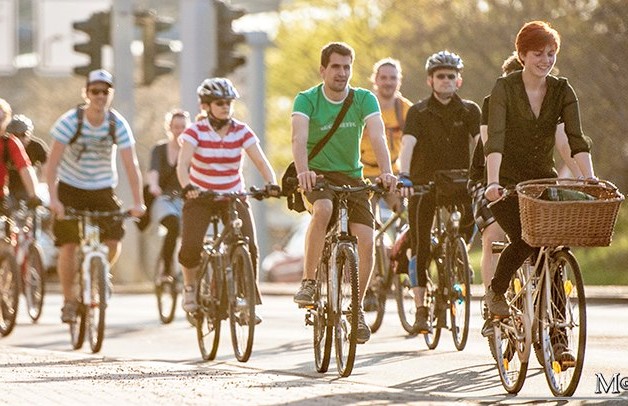

Climate Conversations – How Climate Communication Can Be Effective
How can we engage in conversation with each other about climate issues? And in doing so, how can we successfully represent our own position without breaking off dialogue? In this workshop, we teach the basics of effective and evidence-based climate communication that incorporates change at the individual and structural levels.
Psychology of Collective Actions - Shaping Social Change Together
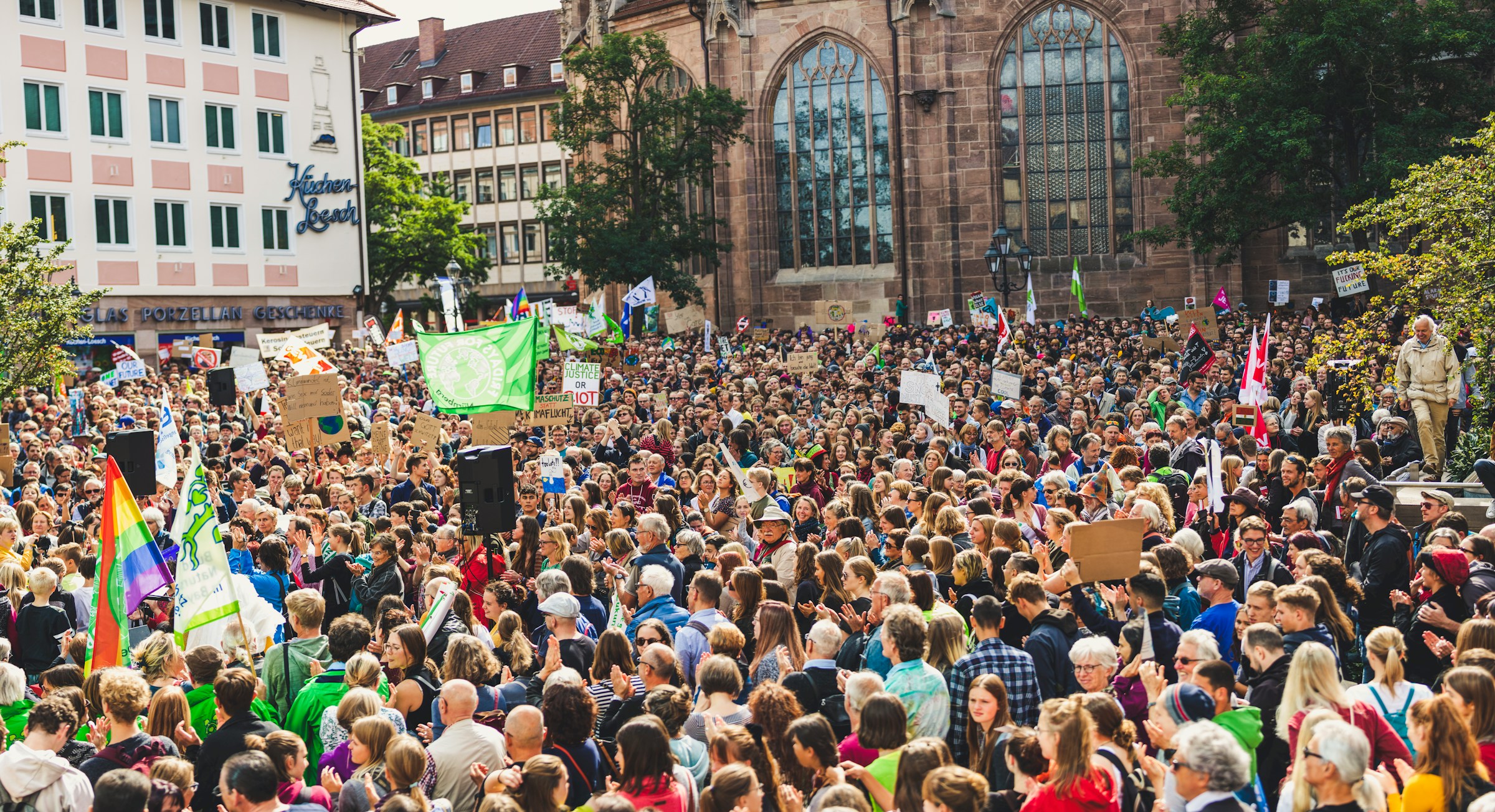
What motivates us to join protests and to raise our voice? In this workshop, we present a model of collective action that helps to make the mobilization for and development of climate demonstrations and other collective actions more effective.
Sustainable Activism – Making Climate Action Resilient
Collective engagement with environmental and climate issues requires perseverance and groups that enable long-term action. However, committed individuals often withdraw due to exhaustion. This workshop highlights psychological insights into resilient activism. It offers space to reflect on one's own resources and stresses. It also addresses the activist burnout dilemma. What is it? How does it arise and how can it be prevented within groups? The workshop is primarily aimed at individuals and groups who are already active.
Climate Myths and Disinformation – Argumentation Strategies Against Climate Change Skeptics
You've probably came across conversations, comments or articles that misrepresent scientific findings on climate change or devalue climate activists to undermine climate protection measures. What can we do about it? In practical exercises, you will learn to recognize climate myths and misinformation and will be given effective strategies for countering them.


Facilitating Environmental Learning – Integrating Environmental Psychology into Climate Education
How can environmental psychology knowledge be incorporated into educational work to support learning about climate issues and and enable people to act sustainably? This workshop teaches basic knowledge in environmental psychology and provides recommendations on how to achieve this. It is aimed at educators in the field of environment and sustainability.
Happiness, Consumption and Degrowth - Creating a Good Life Together
What does a good life mean to us? What values and needs shape our lives, and how can we fulfill them in a sustainable and inclusive way? In this workshop, we will reflect on what enriches our lives and what makes us happy. Together, we will develop approaches for creating a good life in balance with our psychological needs and planetary boundaries.

Interested in Further Content?
In addition to the listed workshops, we also work on other topics such as artistic approaches to climate issues or climate emotions. Please get in touch if you are interested in further topics. Together, we can develop customized workshop formats tailored to specific target groups. We also offer group coaching to provide you with even more targeted support for your commitment.
Power-Critical Education
A power-critical approach is particularly important in environmental education in Germany because rich nations - such as Germany - and, above all, the privileged people who live there are the primary causes of environmental problems and the transgression of planetary boundaries. In addition, less privileged people are more severely affected by the consequences of this. In our educational work, we therefore want to contribute to an understanding of climate justice. We want to create spaces in which power relations and inequalities are reflected upon, questioned, and made visible. In doing so, we attach great importance to highlighting our own position and privileges. We believe that knowledge also reinforces hierarchies, which is why it is important to us to share knowledge, make educational work accessible, and publish material as open source.


Where does our knowledge come from?
It is important to note that the majority of the environmental psychology studies and models we use are unfortunately based on WEIRD samples (Western, Educated, Industrialized, Rich, Democratic), which by no means represent the world population. Intercultural research is still quite rare in the field of environmental psychology. Because WEIRD individuals are responsible for the majority of emissions in times of climate crisis, it may also make sense to focus on this group. Nevertheless, this means that conclusions cannot be carelessly transferred to other contexts.
Feedback Welcome
We see examining power relations and our own privileges as a shared learning process. If you have any feedback about our work, we would be happy to hear from you.


We’d be glad to visit you
We charge fees and travel expenses for the workshops we give. Our prices depend on the duration and the intensity of the workshops as well as the type of the requesting group. Here, we differentiate between local environmental initiatives, environmental NGOs, universities, business enterprises, local governments and others. By doing so, we want to also enable initiatives with less financial means to book our workshops, coaching, or counselling.
If you are interested, please contact us directly.
Participants
-
"Ich habe super viel Praktisches aus dem Workshop mitnehmen können, was ich auf mein Engagement zu Hause direkt anwenden kann. Einfach toll!"

Kristina
Teilnehmerin der Degrowth Summerschool -
"Ich fand die Methodik super spannend und bin motiviert, sie zu Hause mit noch mehr Inhalten zu füllen."

Frieda
Teilnehmerin der Sommerschule -
"Der Workshop war kurzweilig, sehr gut aufgearbeitet und aufgebaut und zusätzlich mit vielen anschaulichen Beispielen und Anwendungsideen durchzogen. Nur zu empfehlen!"

Sophie
Studentin der Universität Konstanz -
"Die Kombination aus Theorie und Praxis fand ich richtig cool. Perfekt für mich und toll zu sehen, was man gemeinsam in Gruppen bewirken kann."

Jan-Niklas
Teilnehmer der Sommerschule -
"Ich glaube, die Psychologie wird total unterschätzt und kann eigentlich total viel bewirken. Danke, dass ihr mir das gezeigt habt!"

Lisa
Teilnemerin der Sommerschule -
"Euer Workshop hat mir Energie gegeben, mit meinem Engagement weiter zu machen. Danke dafür!"

Corinna
Teilnehmerin der Sommerschule -
"Ich habe tolle Strategien kennen gelernt, die ich anwenden und zusammen mit meiner Lokalgruppe effektiv umsetzen kann."
Andreas
Teilnehmer der Sommerschule -
"Ein super gehaltvoller Workshop, bei dem ich inhaltlich und methodisch sehr viel mitnehmen konnte. Anders kann man das nicht zusammenfassen. Vielen Dank dafür."

Jan
Teilnehmer der Sommerschule